







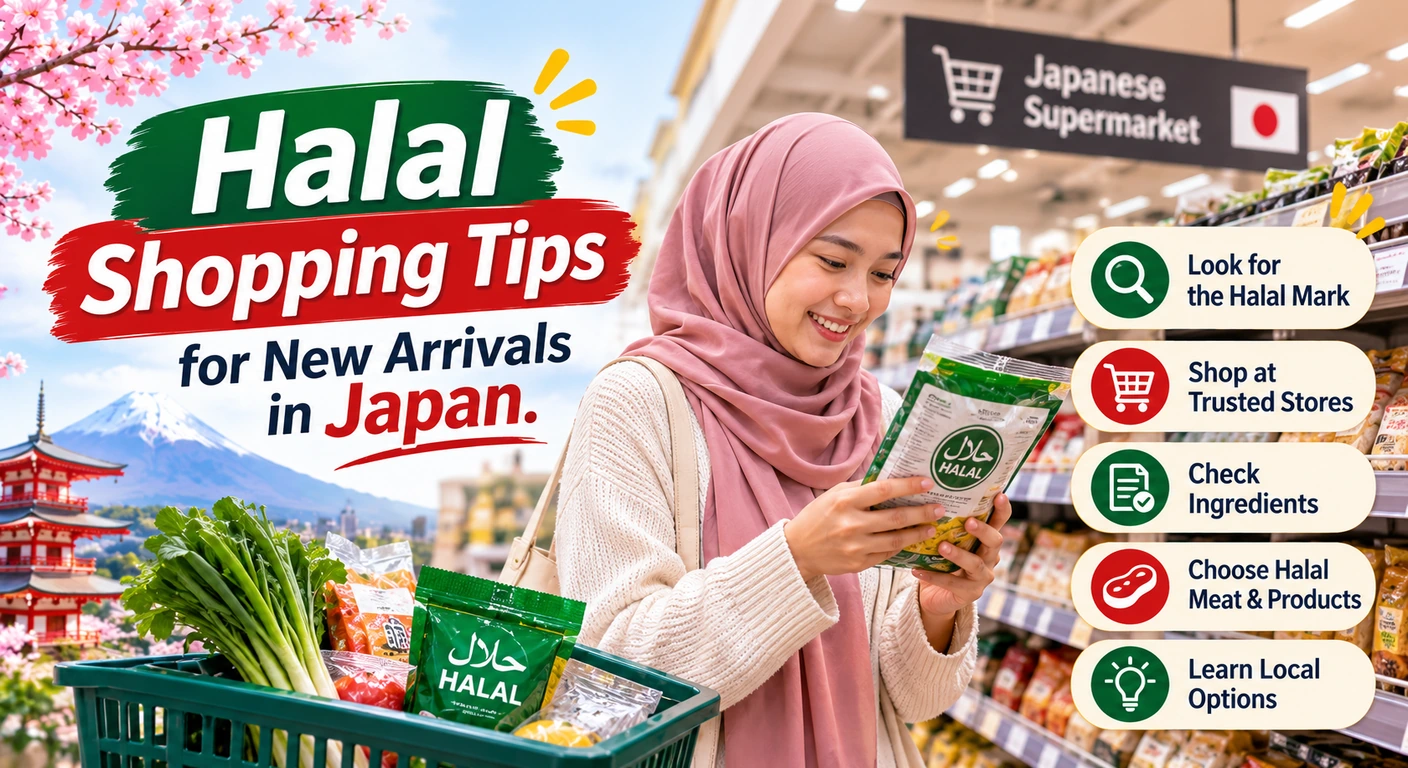
Halal shopping tips for new arrivals in Japan

Moving to Japan is exciting. But your first grocery trip can feel stressful. Labels are in Japanese. Pork and alcohol hide in everyday foods. The nearest halal shop may be far away.
You are not alone, and it gets easier fast. This guide gives you a simple plan for your first weeks. You will learn where to shop, what to check and what to stock up on.
What new arrivals should know first
Many Japanese foods use ingredients that are not halal. These are the common ones:
- Pork, in soups, gyoza, curry roux and bread fillings
- Lard, in fried foods and some ramen
- Mirin and cooking sake, which contain alcohol
- Gelatin, in sweets, jelly and marshmallows
- Animal extracts, often listed as エキス
Regular supermarkets rarely label products as halal. Halal shops are easier to find in big cities. In smaller towns, you may need to plan more or shop online.
Good news: once you learn a few label words and find two or three trusted sources, shopping becomes routine.
Where to buy halal food in Japan
You have four main options.
- Halal grocery stores. These are common in cities like Tokyo, Osaka, Yokohama, Kobe and Kawasaki. They sell halal meat, spices, snacks and pantry items in one place.
- Online halal shops. If you live far from a store, halal grocery delivery in Japan is the easiest fix. You can order meat, spices, rice and snacks and have them sent to your door.
- Import and international stores. These are good for spices, rice, flour and lentils. Many are not fully halal, so check each label.
- Regular supermarkets. Stick to simple items. Fresh fruit and vegetables, eggs, milk, plain rice and plain fish are easy picks. Read the label on anything processed.
Need a trusted place to start? Shop halal groceries online at AA Halal Foods and get your order delivered to your door.
Learn the label words that matter
Labels are your best tool. Learn these words and you can check most products in a minute.
Japanese | Reading | Meaning |
豚 / 豚肉 | buta / butaniku | Pork |
酒 | sake | Sake or alcohol |
みりん | mirin | Sweet rice wine |
アルコール | arukōru | Alcohol |
ゼラチン | zerachin | Gelatin |
ラード | rādo | Lard |
動物性油脂 | dōbutsusei yushi | Animal fat |
エキス | ekisu | Extract |
A few tips:
- Read the full ingredient list. The allergy box does not always list pork.
- Check snacks, soups, curry roux, sweets and bread closely.
- Look for a halal logo, and note who issued it.
- No logo? Treat the product as unchecked.
Instant noodles are a common trap. Many soup bases use pork or lard. Save time with our guide to the best halal instant noodles in Japan.
Buying halal meat and fish
Meat is the biggest concern for most newcomers. “No pork” is not the same as halal. Halal meat must come from an animal slaughtered by halal rules. Regular supermarket meat does not meet this.
Here is what to look for:
- A seller you trust, with clear sourcing
- Halal certification where it is available
- Fresh stock with fast delivery or turnover
AA Halal Foods brings in fresh beef every Thursday and Friday. That helps you plan your weekly meals. Frozen halal meat is also useful. It lets you keep a stock at home and cut down on shopping trips.
Fish is usually fine. The risk is in what comes with it. Check marinades, sauces, oils and processed items like fish cakes. Some contain mirin or extracts.
Your first-month halal shopping list
Start with the basics. This list covers most weekly meals.
Meat and fish
- Halal beef, chicken and lamb
- Fresh or frozen fish
Rice and noodles
- Japanese short-grain rice or basmati
- Pasta and plain noodles
- Halal instant noodles for busy days (see the best halal instant noodles in Japan)
Spices and sauces
- Turmeric, cumin, coriander, chili and garam masala
- Spice pastes for quick curries
- Soy sauce, but check the label. Some brands add alcohol.
Snacks
- Halal biscuits and rice crackers
- Nuts and dried fruit
Pantry
- Cooking oil, flour, lentils, canned tomatoes and tea
Shopping tips for new arrivals
A few habits will save you time and stress.
- Order in bulk. Fewer trips means less hassle. Buy extra when you find a product you trust.
- Set a weekly rhythm. Choose one day to order meat and fresh items.
- Check delivery times. Order before you run out, not after.
- Use your freezer. Freeze meat in meal-size portions.
- Ask your community. Local Muslim groups, mosques and other residents know the best shops and sellers.
- Compare options. If you live far from a store, online halal shopping can help you save.
Common mistakes to avoid
- Trusting “no pork” without checking the full label
- Assuming all seafood sauces are safe
- Buying imported items without reading the Japanese label
- Waiting until the fridge is empty to order
Cooking halal at home in Japan
Home cooking gives you full control. Japanese dishes adapt well.
- Replace mirin with a little rice vinegar and a pinch of sugar.
- Replace cooking sake with water and a slice of ginger.
- Cook halal beef for gyudon, sukiyaki and curry.
- Keep spice pastes on hand for quick weeknight meals.
Simple meals like rice, curry and grilled chicken are easy to repeat. They also help you settle in without stress.
Final thoughts
Your first weeks in Japan will feel easier with a plan. Learn the label words, find a trusted halal source and build a simple shopping routine. Soon it will feel normal.
Ready to stock your kitchen? Order from AA Halal Foods and shop halal with confidence.
FAQs
Where can I buy halal food in Japan?
You can buy it at halal grocery stores, import stores and online halal shops. Regular supermarkets work for simple items only.
Is halal food expensive in Japan?
Prices depend on the item and the seller. Meat usually costs more than other groceries. Buying in bulk and freezing portions can help.
Can I order halal groceries online?
Yes. Delivery is useful if no halal store is near you. See online halal shop vs visiting a store to compare
How do I know a product is halal?
Check for a halal logo and read the full ingredient list. If you are unsure, buy from a source you trust.
Is Japan Muslim friendly?
It is getting better every year, especially in big cities. For a full answer, read is Japan Muslim friendly.