










Top 10 Best-Selling Halal Meats at AA Halal Foods: Beef, Mutton, Lamb and More

There is a particular kind of quiet satisfaction that comes from putting a really good piece of meat on the table. Maybe it is a slow-cooked mutton curry that has filled the whole house with the smell of whole spices. Maybe it is a thick, well-marbled steak sizzling on a Friday evening, or a rack of lamb brought out for Eid. In all of these moments, the quality of what you started with shows up on the plate.
For families who eat halal, quality has two parts. The first is the one every cook cares about: freshness, flavour, tenderness and a clean cut. The second is trust, the confidence that the meat was sourced, handled and prepared in line with halal requirements, from start to finish. When both are in place, cooking becomes easier and meals become more memorable.
That is exactly why so many shoppers keep coming back to AA Halal Foods. In this guide, we look at the ten best-selling items our customers reach for most often, covering premium beef, mutton, lamb, goat and more. For each one, you will find what it is, why people love it, the best way to cook it and what to serve it with. Along the way, we will also cover how to choose the right cut, how to store it properly and the questions we hear most often.
Whether you are stocking the freezer for the month, planning a festive spread or simply upgrading your weeknight dinners, this list will help you shop with confidence.
What Makes Halal Meat Worth the Premium?
Before we get to the list, it helps to understand why premium halal meat is priced the way it is. A higher price is not just a label. It usually reflects several real differences in how the meat is raised, handled and prepared.
Halal certification and handling. Halal meat comes from animals that are healthy at the time of slaughter, treated humanely and processed according to Islamic guidelines. For many customers, this is non-negotiable, and it is the foundation of everything else. When you buy from a supplier you trust, you are also buying peace of mind.
Sourcing and grade. Better cattle, sheep and goats, raised well and fed well, produce better meat. Grade, marbling (the fine threads of fat within the muscle) and age at slaughter all affect flavour and tenderness. Premium cuts such as ribeye, tenderloin and rack of lamb come from the parts of the animal that do the least work, which is why they are naturally softer and cost more.
Trimming and preparation. A well-trimmed, properly portioned cut saves you time and reduces waste. When a butcher removes excess sinew and gristle for you, you are paying for a cleaner product that cooks more evenly.
Freshness and packaging. Careful chilling, freezing and vacuum packing keep meat tasting the way it should. Poor handling shows up quickly as dryness, off flavours or freezer burn.
A quick label check. When you shop for halal meat, look for clear labelling, a visible halal certification mark and straightforward ingredient lists, especially on marinated or processed products. If something is unclear, ask. A good supplier will be happy to explain.
Now, let us get to the ten products customers love most.
The Top 10 Best-Selling Halal Items at AA Halal Foods
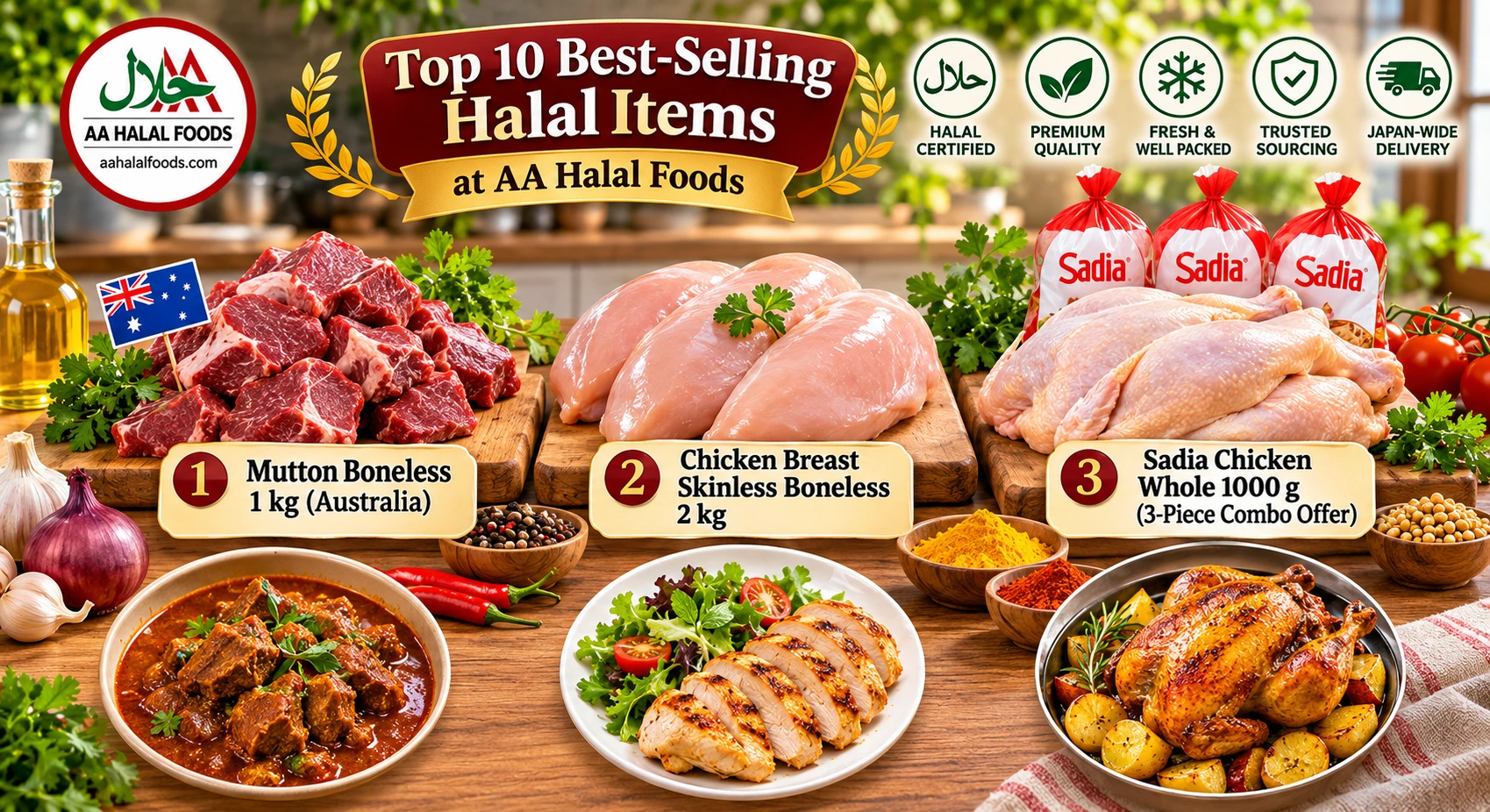
1. Mutton Boneless 1 kg (Australia)
At the top of the list is Australian boneless mutton. Mutton comes from mature sheep and has a deeper, richer flavour than lamb, which is why it is the meat of choice for festive cooking across South Asia and the Middle East. The boneless cut means no bones to work around, just lean, flavourful meat ready for the pan.
Why customers choose it: It is the most convenient way to cook mutton. There is nothing to trim, portions are easy to measure and the meat works equally well in quick stir-fries and slow curries. The Australian origin is also a draw for many shoppers.
How to cook it: Cut into even cubes and marinate in yoghurt, ginger, garlic and spices for a few hours or overnight. Cook slowly with a little liquid until tender, or use a pressure cooker to save time. Mutton rewards patience.
Serve it with: Fragrant basmati rice, fresh naan or paratha, and a cooling cucumber raita.
2. Chicken Breast Skinless Boneless 2 kg
The second most expensive pack is also the one with the broadest appeal. Skinless, boneless chicken breast is lean, mild and incredibly versatile, which is why it appears in everything from grilled dinners to salads, sandwiches and stir-fries.
Why customers choose it: It is high in protein, low in fat and quick to cook. At 2 kg, it suits meal preppers, larger families and anyone who likes to cook in batches. Because the pack is large, the price per kilogram is actually lower than the sticker price suggests.
How to cook it: Chicken breast dries out quickly, so do not overcook it. Pound it to an even thickness, season well and cook until the centre reaches 165°F (74°C). Marinating in yoghurt, lemon or buttermilk keeps it juicy. Rest for a few minutes before slicing.
Serve it with: Roasted vegetables, rice bowls, wraps or a fresh salad.
3. Sadia Chicken Whole 1000 g (3-Piece Combo Offer)
Sadia is a well-known Brazilian halal chicken brand, and this combo gives you three whole chickens in one purchase. Whole birds are the practical choice for families, because one bird can become several meals.
Why customers choose it: A combo offer means better value and a stocked freezer. Whole chickens are flexible: roast one, curry one and joint one for grilling. The bones also make excellent stock.
How to cook it: Pat the bird dry, rub generously with salt, spices and a little oil, and roast until the thickest part of the thigh reaches 165°F (74°C). Rest for ten minutes before carving. For curry, cut it into pieces and cook it bone-in for more flavour.
Serve it with: Roast potatoes, pilau rice or a simple vegetable curry.
4. Beef With Bone (Fresh) 1 kg
Fresh beef on the bone is the foundation of countless comfort dishes, from rich curries and slow stews to soups and traditional braises. The bones and connective tissue give the sauce body and flavour that boneless beef cannot match.
Why customers choose it: It delivers deep, satisfying flavour and makes a little meat go a long way. Because it is sold fresh, it suits cooks who want to start dinner the same day or portion it for the freezer.
How to cook it: Low and slow is the rule. Brown the pieces, add onions, spices and liquid, then simmer gently for two to three hours until the meat is tender. A pressure cooker cuts that time dramatically.
Serve it with: Steamed rice, flatbread or crusty bread to soak up the gravy.
Browse more cuts in our halal beef collection.
5. Mutton Shank 1 kg
The shank is the lower leg of the animal, and it is a favourite among people who love slow-cooked food. The meat is full of collagen, which turns silky and tender during long cooking and enriches any sauce.
Why customers choose it: For dishes like nihari, braised shanks and hearty soups, nothing else gives the same melt-in-the-mouth result. It is also on offer at a reduced price at the time of writing, which makes it a smart pick for a special meal.
How to cook it: Brown the shanks, then braise with onions, tomatoes, spices and enough liquid to nearly cover them. Cook gently for three hours or more, or about an hour in a pressure cooker, until the meat falls from the bone.
Serve it with: Soft naan, mashed potatoes or rice, plus a squeeze of lemon and fresh herbs.
6. Mutton With Bone 1 kg (Australia)
This is the classic curry cut: a mix of meat and bone from Australian mutton, ready for biryanis, kormas and rezala. If you cook South Asian food, you likely know the value of a good bone-in mutton pack.
Why customers choose it: Bones give the dish aroma and body, and the mix of cuts adds variety to every bite. Many cooks say the flavour is simply better when the meat is cooked on the bone.
How to cook it: Marinate in yoghurt and spices, then cook slowly in a heavy pot until the meat pulls easily from the bone. For biryani, parboil the meat first or cook it until three quarters done before layering with rice.
Serve it with: Fragrant polao or biryani rice, fried onions and a fresh salad.
Looking for the right cut for your next gathering? Explore the full mutton selection.
Stock up on halal mutton and goat. Planning a family meal or festive menu? Visit AA Halal Foods to browse our mutton, goat and beef range and add your favourites to your cart. Shop the full range.
7. Goat Meat 1 kg
Goat meat is lean, flavourful and loved across many cuisines. It has a slightly sweeter and more distinctive taste than beef, and it takes spices beautifully. For many families, goat is the taste of home and festival cooking.
Why customers choose it: It is a traditional ingredient for curries, stews and celebration dishes, and a good choice for people who want a leaner red meat than beef or mutton.
How to cook it: Because it is lean, goat benefits from moist, slow cooking. Braise it or stew it with plenty of onions, tomatoes and spices. Marinating overnight in yoghurt and ginger helps tenderise the meat. Cook until it is soft enough to cut with a spoon.
Serve it with: Rice, flatbread or a simple lentil dal.
8. Beef Paya 2 kg (Fresh)
Paya is beef trotters, and it is the heart of a beloved South Asian dish of the same name. Cooked slowly for hours, the trotters release collagen that creates a rich, glossy, deeply savoury broth. It is a classic for weekend breakfasts and cold-weather meals.
Why customers choose it: It is not easy to find good paya, and this 2 kg pack feeds a crowd. For families who cook it regularly, a fresh pack saves a trip to a specialist butcher.
How to cook it: Clean the pieces well and blanch them briefly to remove impurities. Then cook slowly with onions, ginger, garlic and whole spices for four to six hours, or about an hour in a pressure cooker, until the meat is soft and the broth is thick.
Serve it with: Hot naan or kulcha, sliced ginger, green chillies and a squeeze of lemon.
9. Chicken Leg Whole (7 to 8 Pieces) 1.6 to 1.8 kg
Chicken legs are juicier and more forgiving than breast meat, which makes them a favourite for roasting, grilling and curries. This pack of seven to eight whole legs is a family-sized option for busy weeks.
Why customers choose it: The dark meat stays moist and flavourful even if you cook it a little longer than planned. Bone-in legs are also cheaper per kilogram than boneless cuts and carry more flavour.
How to cook it: Marinate with yoghurt, lemon and spices, then grill, roast or bake until the juices run clear and the thickest part reaches 165°F (74°C). For curry, simmer the pieces gently until they are tender and the sauce has thickened.
Serve it with: Roast vegetables, pilau rice or warm flatbreads.
10. Chicken Leg Boneless 2 kg
Rounding out the list is boneless chicken leg, a smart choice for cooks who want the juiciness of dark meat without the bones. At 2 kg, it is a practical pack for kebabs, skewers, stir-fries and batch cooking.
Why customers choose it: It cooks quickly, slices easily and stays tender, even on a hot grill. It is also forgiving for beginners, since it is harder to overcook than breast meat.
How to cook it: Cut into bite-sized pieces, marinate for at least an hour and cook over high heat for kebabs, or sauté for stir-fries and curries. Cook until the meat reaches 165°F (74°C).
Serve it with: Rice bowls, wraps, salads or a fresh herb sauce.
For more everyday poultry options, visit our halal chicken collection.
Quick Comparison
Rank | Item | Category | Pack | Listed price |
1 | Mutton Boneless (Australia) | Mutton | 1 kg | ¥2,130 |
2 | Chicken Breast Skinless Boneless | Chicken | 2 kg | ¥1,850 |
3 | Sadia Chicken Whole (3-piece combo) | Chicken | 1000 g per bird | ¥1,755 |
4 | Beef With Bone (Fresh) | Beef | 1 kg | ¥1,685 |
5 | Mutton Shank | Mutton | 1 kg | ¥1,495 |
6 | Mutton With Bone (Australia) | Mutton | 1 kg | ¥1,489 |
7 | Goat Meat | Goat | 1 kg | ¥1,485 |
8 | Beef Paya (Fresh) | Beef | 2 kg | ¥1,450 |
9 | Chicken Leg Whole (7 to 8 pieces) | Chicken | 1.6 to 1.8 kg | ¥1,450 |
10 | Chicken Leg Boneless | Chicken | 2 kg | ¥1,450 |
How to Choose the Right Cut
With so many options, it helps to match the cut to the cooking method rather than the other way around.
Match the cut to the cooking method. Tender, lean cuts such as tenderloin, ribeye and rack of lamb suit fast, high-heat cooking. Tougher, collagen-rich cuts such as shank, shoulder and curry cut need time and moisture, and reward you with deep flavour.
Decide between bone-in and boneless. Bone-in cuts bring extra flavour and body to curries, soups and roasts. Boneless cuts are easier to slice and cook faster, making them handy for quick meals and kebabs.
Think about fat. Marbling and a modest fat cap keep meat juicy and flavourful. Very lean cuts are healthier on paper but can dry out, so cook them carefully or add moisture.
Plan your quantities. As a rough guide, allow about 150 to 200 grams of boneless meat per person, or 250 to 350 grams for bone-in cuts. For large gatherings or Eid feasts, it is better to round up than to run short.
Fresh or frozen? Both can be excellent. Properly frozen meat holds its quality well, and it gives you flexibility to buy in bulk and cook on your schedule. If you are planning ahead, freezing in meal-sized portions is the smartest move.
Not sure where to start? Our team can help you pick the right cut for your recipe and your budget. Get in touch for advice or bulk orders.
Storage and Cooking Tips for Better Results
Great meat deserves careful handling. A few simple habits make a noticeable difference.
Refrigerate promptly. Store raw meat on the lowest shelf of your fridge, on a plate or in a container so juices cannot drip onto other food. Raw steaks, roasts and bone-in cuts are generally best used within three to five days, while ground meat should be cooked within one to two days.
Freeze smart. If you will not use meat soon, freeze it in airtight packaging with as much air removed as possible to prevent freezer burn. Label with the date and the cut.
Thaw safely. The best method is slow thawing in the fridge, which can take a day or more for larger cuts. Avoid thawing on the counter. For a faster option, use cold water in a sealed bag and change the water regularly.
Season ahead. Salting meat an hour or more before cooking, or even the night before, improves flavour and helps with moisture. For tougher cuts, a marinade with yoghurt, vinegar or citrus can also help tenderise.
Do not skip the rest. Letting cooked meat rest for five to ten minutes allows juices to redistribute, so every slice is moist.
Use a thermometer. It is the single most helpful tool for getting consistent results. Whole cuts of beef, lamb, mutton and goat should reach 145°F (63°C), with ground meat at 160°F (71°C). Slow-cooked dishes are done when the meat is tender, regardless of temperature.
Conclusion
Good food begins with good ingredients, and for halal-conscious families, that means meat you can trust as much as you enjoy. From a perfectly seared ribeye to a slow-cooked mutton curry, from the elegance of a lamb rack to the everyday convenience of a family pack, these ten best-sellers show why customers keep returning to AA Halal Foods.
Whichever cut you choose, remember the basics: match the meat to the method, handle it with care and give it time to rest. Do those things, and the quality will speak for itself.
Frequently asked questions
Is all the meat at AA Halal Foods halal-certified?
AA Halal Foods is built around halal sourcing. For certification details on any specific product, check the product page or contact the team directly.
What is the difference between mutton and lamb?
Lamb comes from young sheep and is tender and mild. Mutton comes from mature sheep and has a deeper, stronger flavour that suits slow cooking, curries and roasts.
Can I order in bulk for Eid or large events?
Yes, many customers stock up for festive seasons and gatherings. Reach out ahead of time so your order can be planned properly.
How should I store my meat after delivery or pickup?
Refrigerate what you will cook within a few days and freeze the rest in meal-sized portions. Keep raw meat away from ready-to-eat foods at all times.
Which cut is best for curry?
Bone-in cuts of mutton, goat or beef are the classic choices. The bones and connective tissue enrich the gravy and keep the meat tender.