












Fresh vs. Frozen: How to Choose and Store Halal Meat in Japan

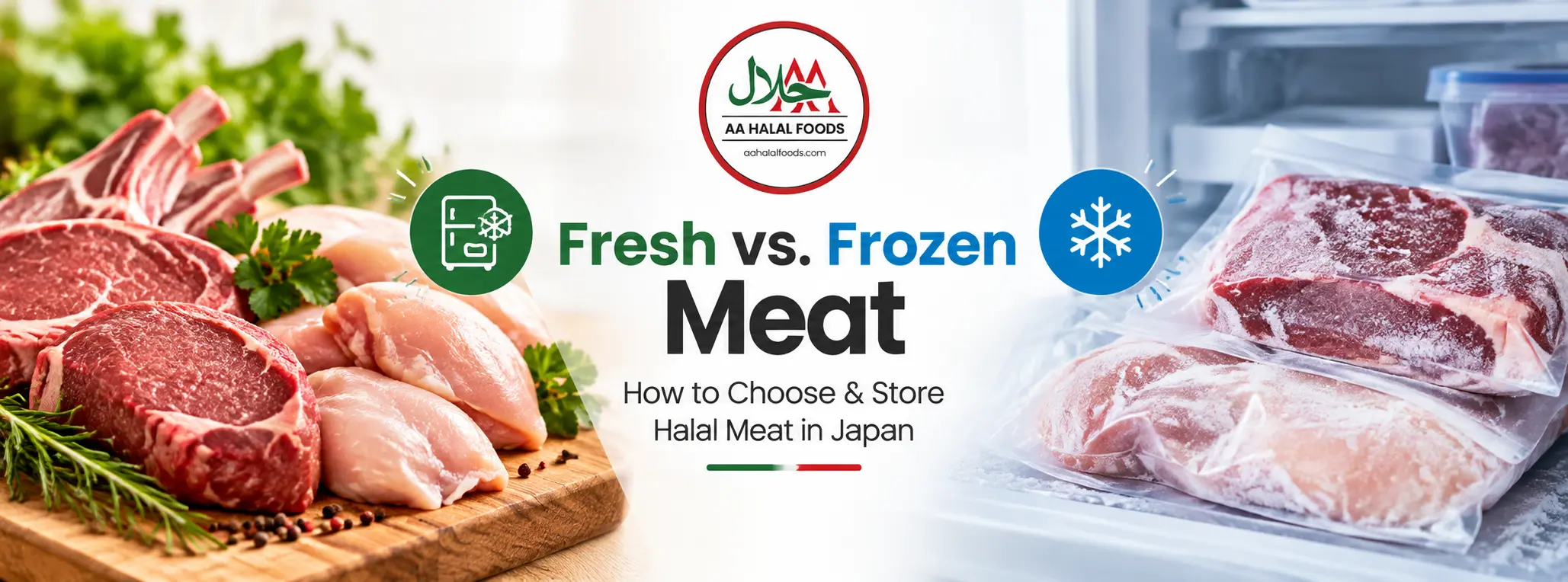
Finding halal meat in Japan is already a small win. But once it’s in your basket, a new question shows up: should you go fresh or frozen? For Muslim families and halal-conscious shoppers living in Japan, this choice affects taste, cost, and how often you need to restock.
At AA Halal Foods, we get asked this often. So here’s a clear, practical guide to help you pick the right option and store it safely once it’s home.
Fresh halal meat: what it means
Fresh halal meat is kept chilled, usually between 0°C and 4°C, right after slaughter. It’s never dropped below freezing, so the texture and flavour stay close to natural.
Why people choose fresh halal meat:
- Better texture. Chilled meat is tender and cooks up juicier, especially for grilling or pan-searing.
- No defrosting needed. You can season and cook it the same day.
- Higher vitamin retention. Fresh cuts hold on to more water-soluble vitamins, like B vitamins, than meat that’s been frozen and thawed.
The catch is shelf life. Fresh halal meat usually lasts only 3 to 5 days in the fridge, so it works best if you’re cooking soon after buying, or if you live near a halal butcher and can restock easily.
Frozen halal meat: what it means
Frozen halal meat is slaughtered under halal guidelines, then flash-frozen and kept at -18°C or below. Freezing stops bacterial growth almost entirely, so the meat stays safe for months.
Why people choose frozen halal meat:
- Long shelf life. Frozen cuts can be stored for months, which matters a lot if your nearest halal butcher is far away.
- Fewer shopping trips. One bulk order can cover weeks of meals, which is useful in cities like Tokyo, Chiba, or Osaka where halal grocery stores aren’t on every corner.
- Less food waste. You only thaw what you need, so nothing spoils before you get to it.
- Good nutrient retention. Modern flash-freezing locks in most nutrients, with only a small dip in a few water-soluble vitamins.
For most halal shoppers in Japan, frozen meat is the practical default. It’s how AA Halal Foods ships most of our products nationwide, since delivery times mean fresh meat isn’t always realistic outside major cities.
Fresh vs. frozen: quick comparison
| Fresh halal meat | Frozen halal meat | |
| Storage temp | 0°C to 4°C | -18°C or below |
| Shelf life | 3 to 5 days | Several months |
| Best for | Cooking within days | Stocking up, meal planning |
| Shopping frequency | Frequent | Occasional, bulk orders |
| Delivery friendly | Limited | Yes |
How to store halal meat safely at home
Whichever you choose, storage matters just as much as the meat itself.
For fresh halal meat:
- Keep it at 0°C to 4°C, ideally in the coldest part of your fridge.
- Leave it in its sealed packaging, or move it to an airtight container.
- Cook or freeze it within 3 to 5 days.
For frozen halal meat:
- Store it at -18°C or colder, right at the back of the freezer where the temperature is most stable.
- Use freezer bags or vacuum-sealed packs to prevent freezer burn.
- Label each pack with the date it was frozen, so nothing gets forgotten.
Does freezing affect halal status?
No. Freezing is just a storage method. As long as the animal was slaughtered according to halal guidelines before freezing, the meat stays halal. This is also why checking for proper halal certification matters more than checking whether the meat is fresh or frozen.
Which should you choose?
It really comes down to your routine.
Go fresh if:
- You’re cooking within a few days.
- You live near a halal butcher or grocer.
- Texture and taste are your top priority for that meal.
Go frozen if:
- You want to stock up and shop less often.
- You’re ordering halal meat online for delivery.
- You’re cooking for a family and want to plan meals in advance.
Many households in Japan end up doing both. Fresh for weekend meals with family, frozen for weekday cooking and backup stock.
Frequently asked questions
Is it better to eat fresh or frozen meat?
Neither is better across the board. It depends on what you’re cooking and when.
Fresh meat wins on texture and taste, since it’s never gone through the freeze-thaw process. It’s the better pick for a meal you’re cooking today or tomorrow.
Frozen meat wins on safety and convenience. Once thawed properly, it’s just as nutritious and, for most dishes, tastes nearly the same once cooked. It’s the better pick if you’re meal planning, buying in bulk, or ordering halal meat online for delivery.
For everyday cooking in Japan, most halal households lean on frozen meat and save fresh cuts for special meals.
Why is frozen meat cheaper than fresh?
A few reasons come down to cost and logistics.
- Bulk processing. Frozen meat is often processed and packed in larger batches, which lowers the cost per kilo.
- Less waste for sellers. Fresh meat has a short shelf life, so stores mark down or discard what doesn’t sell in time. That risk gets priced into fresh cuts.
- Cheaper shipping. Frozen meat can be shipped in bulk and stored for longer, which cuts down on the frequent, smaller deliveries fresh meat needs.
- Lower spoilage risk. Since frozen meat doesn’t spoil quickly, suppliers can hold stock longer without losing money, which keeps prices more stable.
This is part of why frozen halal meat is often the more budget-friendly choice for families shopping regularly.
Does freezing meat destroy protein?
No. Freezing does not break down or destroy protein. The protein content of meat stays the same before and after freezing.
What can change is texture. Ice crystals that form during freezing can affect the muscle fibres slightly, which is why frozen meat sometimes feels a touch less tender than fresh. Flash-freezing, which AA Halal Foods uses, forms smaller ice crystals and keeps this effect to a minimum.
So nutritionally, frozen halal meat holds up well. You’re not losing protein, just a small amount of texture in some cuts.
Shop halal meat at AA Halal Foods
Whether you’re after fresh cuts or freezer-friendly packs, AA Halal Foods delivers certified halal meat across Japan, from Chiba to wherever you call home. Browse our halal chicken, halal beef, and halal lamb, and stock your kitchen with food you can trust.