










Halal spices in Japan: when to use spice paste and when to use dry

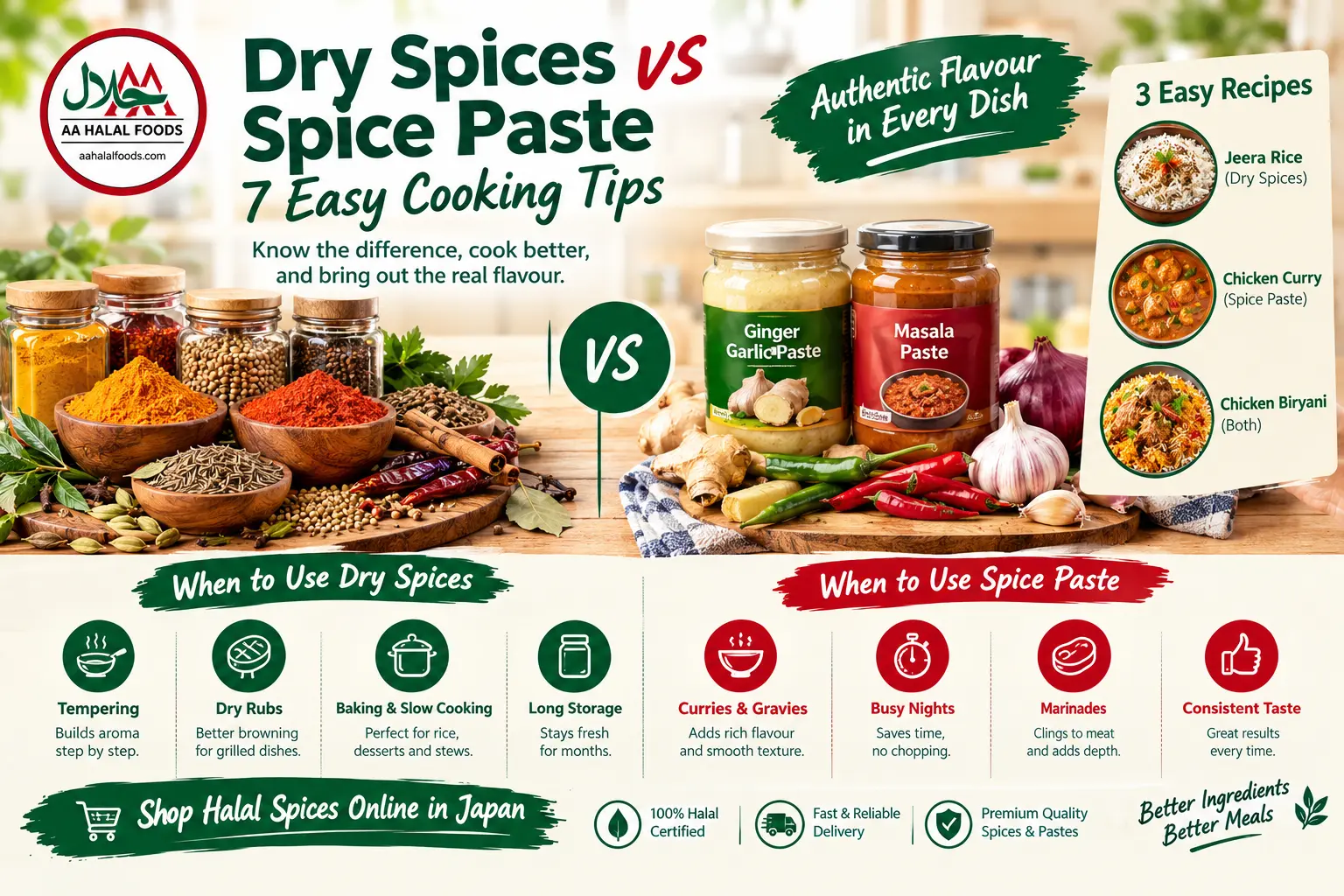
You find a great recipe. It needs cumin, garlic, ginger, and chilli. In your cupboard, you have a jar of paste and a few bags of dry spices. Which one do you use?
Both work. But they do different jobs. Pick the right one and your food tastes better, cooks faster, and wastes less.
This guide keeps it simple. You will learn when to use each one, how to store them in Japan's humid weather, and how to shop for halal spices in Japan with confidence. You also get three easy recipes to try this week.
What is the difference between dry spices and spice paste?
Dry spices are the ones most of us grew up with. Some are whole, like cumin seeds, cardamom, cloves, and cinnamon sticks. Others are ground, like turmeric, coriander powder, and chilli powder. They hold very little water, so they last a long time.
Spice paste is a thick blend of spices with ginger, garlic, onion, or oil. Ginger garlic paste is the best known. Masala paste is a favourite for curries. Paste brings fresh, bold flavour and saves you time.
Neither one wins. They are tools, and a good kitchen has both.
When dry spices work better
Pick dry spices when you want to build flavour step by step.
- Tempering. Hot oil plus whole spices like cumin or mustard seeds gives a strong aroma. Paste would burn here.
- Dry rubs. For crisp grilled chicken or kebabs, a dry rub browns better. Paste adds water, and water slows browning.
- Baking and slow cooking. Cinnamon, cardamom, and cloves shine in rice dishes, desserts, and long stews.
- Long storage. Sealed jars of dry spices stay good for months, so buying in bulk makes sense.
Need to restock? Shop our range of dry halal spices and start with cumin, coriander, turmeric, chilli powder, and garam masala.
Quick recipe 1: jeera rice (serves 3)
You need:
- 1 cup basmati rice, rinsed and soaked for 15 minutes
- 1 tbsp oil or ghee
- 1 tsp cumin seeds
- 1 bay leaf
- 1¾ cups water
- Salt to taste
Steps:
- Heat the oil. Add the cumin and bay leaf. Wait until the seeds sizzle.
- Add the drained rice and salt. Stir for one minute.
- Pour in the water, cover, and cook on low for 12 to 15 minutes.
- Rest for 5 minutes, then fluff with a fork.
When spice paste is the smarter choice
Pick paste when you want a rich base with less work.
- Curries and gravies. Paste melts into the sauce and gives it body. No gritty bits.
- Busy nights. Peeling garlic and grating ginger takes time. A spoonful of paste does it in seconds.
- Marinades. Paste clings to meat better than powder. Mix it with yoghurt and the flavour goes deep.
- Steady taste. Every batch comes out the same, which helps new cooks a lot.
Want to skip the chopping? You can buy halal spice paste online in Japan and get dinner started in minutes.
Quick recipe 2: easy chicken curry (serves 3)
You need:
- 400 g chicken, cut into small pieces
- 2 tbsp oil
- 1 onion, chopped
- 1½ tbsp ginger garlic paste
- 1 tbsp masala paste
- 2 tomatoes, chopped
- 1 cup water
- Salt to taste
Steps:
- Fry the onion in oil until golden.
- Add the ginger garlic paste. Cook for one minute.
- Add the masala paste and tomatoes. Cook until the oil separates, about 4 minutes.
- Add the chicken, salt, and water. Cover and simmer for 10 to 12 minutes until cooked through.
Dry spices vs spice paste at a glance
Dry spices | Spice paste | |
Flavour | Deep and warm | Fresh and bold |
Prep time | Needs more steps | Ready to use |
Shelf life | Long | Shorter once opened |
Best for | Tempering, rubs, baking | Curries, marinades, gravies |
Beginner friendly | Takes practice | Very easy |
Why spice paste in Japan makes life easier
Many homes in Japan have small kitchens and little storage. One jar of paste can replace several ingredients.
Fresh ginger and garlic also go soft fast, especially in humid summers. They can get pricey too. Not every supermarket stocks what you need for South Asian or Middle Eastern cooking either.
Add long work days, and paste starts to make sense. You open a jar and cook. If you miss the taste of home, a good ginger garlic paste in Japan brings that base flavour back in one spoon.
Use both for the best flavour
The best home cooks mix the two. Paste builds the base. Dry spices add the finish. This is where food starts to taste like a restaurant dish.
Quick recipe 3: simple chicken biryani (serves 4)
You need:
- 500 g chicken
- 2 tbsp ginger garlic paste
- 1 cup plain yoghurt
- 1 tsp chilli powder
- ½ tsp turmeric
- 1 tbsp biryani masala or garam masala, split in two
- 2 cups basmati rice, soaked for 20 minutes
- 4 cloves, 4 cardamom pods, 1 cinnamon stick, 2 bay leaves
- 2 onions, sliced and fried
- Oil and salt
Steps:
- Mix the chicken with the paste, yoghurt, chilli, turmeric, half the masala, and salt. Marinate for at least one hour.
- Boil the rice with the whole spices and salt until 70 percent cooked. Drain.
- Cook the chicken in a heavy pot with a little oil for 10 minutes.
- Spread the rice over the chicken. Top with fried onions and the rest of the masala.
- Cover tightly. Cook on low for 20 minutes. Rest for 10 minutes before serving.
If you are looking for halal masala blends to finish your biryani, check our online store.
How to store spices and paste in Japan
Humidity is the main enemy here. These habits help:
- Use airtight jars for dry spices. Add a silica pack during the rainy season.
- Choose whole spices when you can. They stay fresh longer than ground ones.
- Refrigerate paste after opening. Use a clean, dry spoon every time.
- Pour a thin layer of oil on top of the paste to protect it.
How to check halal spices in Japan
Most plain spices are fine. Blends and pastes need a closer look.
- Read the ingredient list. Watch for alcohol-based extracts, gelatin, and animal-based additives.
- Be careful with vague words like "seasoning" or "flavouring" when no source is listed.
- Look for a clear halal certification mark on the pack.
- Buy from a trusted halal grocery store in Japan.
Ready to stock your kitchen?
Here is the short version. Use dry spices for tempering, rubs, and baking. Use paste for curries, marinades, and fast weeknight meals. Use both when you want the best flavour.
Pick one jar of paste and a few dry basics, then try the recipes above.
At AA Halal Foods, we deliver halal spices in Japan to your door, from whole spices to ready-to-use pastes.
- Browse our full spice range today.
- Add a spice paste to your cart and cook your first curry tonight.