












Farm-raised vs wild-caught fish: taste, price, safety and halal status

You stand at the fish counter. Two salmon fillets sit side by side. One says wild-caught. The other says farm-raised. The price gap is big. Which one do you buy?
The answer depends on your budget, your taste and how you cook. If you shop halal, there is one more thing to check. In this guide, we explain wild-caught vs farm-raised fish in plain words. You will also learn how to pick fresh fish and what to know about halal fresh fish in Japan.
What do wild-caught and farm-raised mean?
Wild-caught fish live in the sea, rivers or lakes. They eat what nature gives them. Fishers catch them with nets or lines.
Farm-raised fish grow in tanks, ponds or sea pens. Farmers control their feed and space. This is called aquaculture.
You will find both types in Japan. Yellowtail, sea bream and salmon are often farmed. Mackerel, sardines and horse mackerel are mostly wild-caught. The label tells you which one you are buying.
Wild-caught fish: pros and cons
Pros
- Natural diet. Wild fish eat what they find in the water.
- Firm, lean meat. The texture is often meatier and less oily.
- Strong flavor. Many people say it tastes more like the sea.
Cons
- Higher price. Catching fish at sea costs more.
- Uneven supply. Weather and season change what is available.
- Size and fat vary. Two fillets of the same fish can taste different.
- Overfishing worries. Some wild stocks are under pressure. Look for responsible catch labels when you can.
Farm-raised fish: pros and cons
Pros
- Steady supply. You can find it all year.
- Lower price. Farming is easier to plan, so costs stay down.
- Even size and fat. Fillets look and cook the same each time.
- Mild taste. Great for kids and for people who dislike a strong fish smell.
Cons
- Quality depends on the farm. Feed, water and space all matter.
- Crowded pens can cause problems. Poor farms may use more medicine to keep fish healthy.
- Softer flavor. Some people find it less exciting than wild fish.
Good farms do exist. The goal is to buy from sellers you trust.
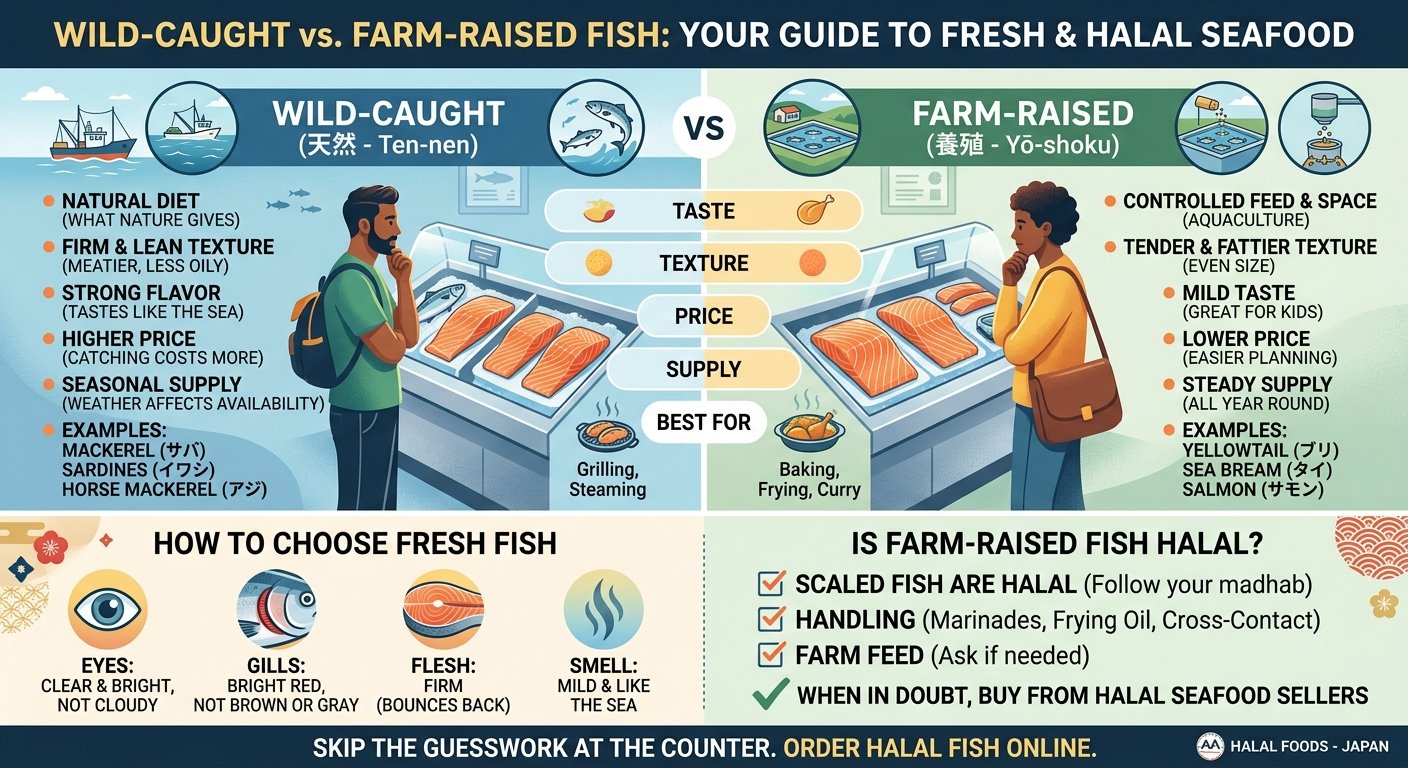
Farm-Raised vs Wild-Caught Fish at a glance
Wild-caught | Farm-raised | |
Taste | Strong, natural | Mild, soft |
Texture | Firm and lean | Tender and fattier |
Price | Higher | Lower |
Supply | Changes by season | Steady all year |
Best for | Grilling, steaming | Baking, frying, curry |
Not sure which one to try first? Browse our fresh fish range and pick what fits your next meal.
Is farm-raised fish halal?
Short answer: the type of fish matters more than whether it is wild or farmed.
Most scholars agree that fish with scales are halal. Views differ on some seafood, like shellfish, eel and other fish without scales. Follow the opinion you trust.
Handling matters too. Check these points:
- Marinades and sauces. Some contain alcohol or non-halal ingredients.
- Frying oil. Make sure it is not shared with non-halal foods.
- Cross-contact. At a regular shop, fish may share knives and boards with non-halal meat.
- Farm feed. Some shoppers also ask what the fish ate. If this matters to you, ask the seller.
So, is farm-raised fish halal? In most cases, yes, if the fish itself is halal and it is handled well. When in doubt, buy from a halal seafood seller who can answer your questions. If you also buy meat, our guide on how to check if beef is halal uses the same smart habits.
How to choose fresh fish
Wild or farmed, fresh fish should pass the same simple test.
- Eyes: clear and bright, not cloudy.
- Gills: bright red, not brown or gray.
- Flesh: firm. It should bounce back when you press it.
- Smell: mild and like the sea. A sharp fishy smell means it is old.
- Label: check the origin, the date and whether it is wild or farmed.
For fillets, look for moist, shiny flesh with no dry edges.
Best ways to cook each type
Wild-caught fish is lean. Keep the cooking simple. Grill it, pan-sear it or steam it with ginger and lemon. Do not overcook it, or it dries out fast.
Farm-raised fish has more fat and a mild taste. That makes it perfect for bold flavors. Bake it with garlic and herbs. Fry it in a spiced coating. Or drop it into a rich curry.
Here is a quick rule. Want the fish to be the star? Pick wild. Want spices to be the star? Pick farmed.
How to store fresh fish at home
Fish spoils fast, so store it well.
- Keep it in the coldest part of your fridge.
- Cook it within one or two days.
- For longer storage, wrap portions tightly and freeze them.
- Thaw in the fridge, not on the counter.
Want the full details? Read our guide on how to store halal meat and fish.
Where to buy halal fresh fish in Japan
Finding halal fish in Japan can feel hard. Many shops do not label how fish is handled. That is why more people now buy fresh fish online in Japan from halal-focused stores.
At AA Halal Foods, you can shop from a trusted halal grocery in Japan and find fish and other halal essentials in one place.
Ready to cook with better fish?
Wild-caught or farm-raised, the best fish is the one that is fresh, handled well and right for your meal. Now you know how to read labels, spot freshness and check halal details.
Skip the guesswork at the counter. Order halal fish from AA Halal Foods and bring fresh flavor to your table.
FAQs
Is wild-caught fish better than farm-raised fish?
Not always. Wild fish has a stronger flavor and leaner meat. Farmed fish is milder, softer and cheaper. The better choice depends on your taste and budget.
Is farm-raised fish safe to eat?
Yes, when it comes from a well-run farm and is stored properly. Buy from sellers who share where the fish comes from.
Is farm-raised fish halal?
It can be. The fish type and handling matter most. Scaled fish are widely accepted as halal. Views differ on some other seafood.
Which is cheaper in Japan, wild or farmed fish?
Farmed fish is usually cheaper. Prices for wild fish rise when the catch is low.
Does farmed fish taste different from wild fish?
Yes. Farmed fish tastes milder and feels fattier. Wild fish tastes stronger and feels firmer.