










What Is Halal Food and Why It Matters in Japan?

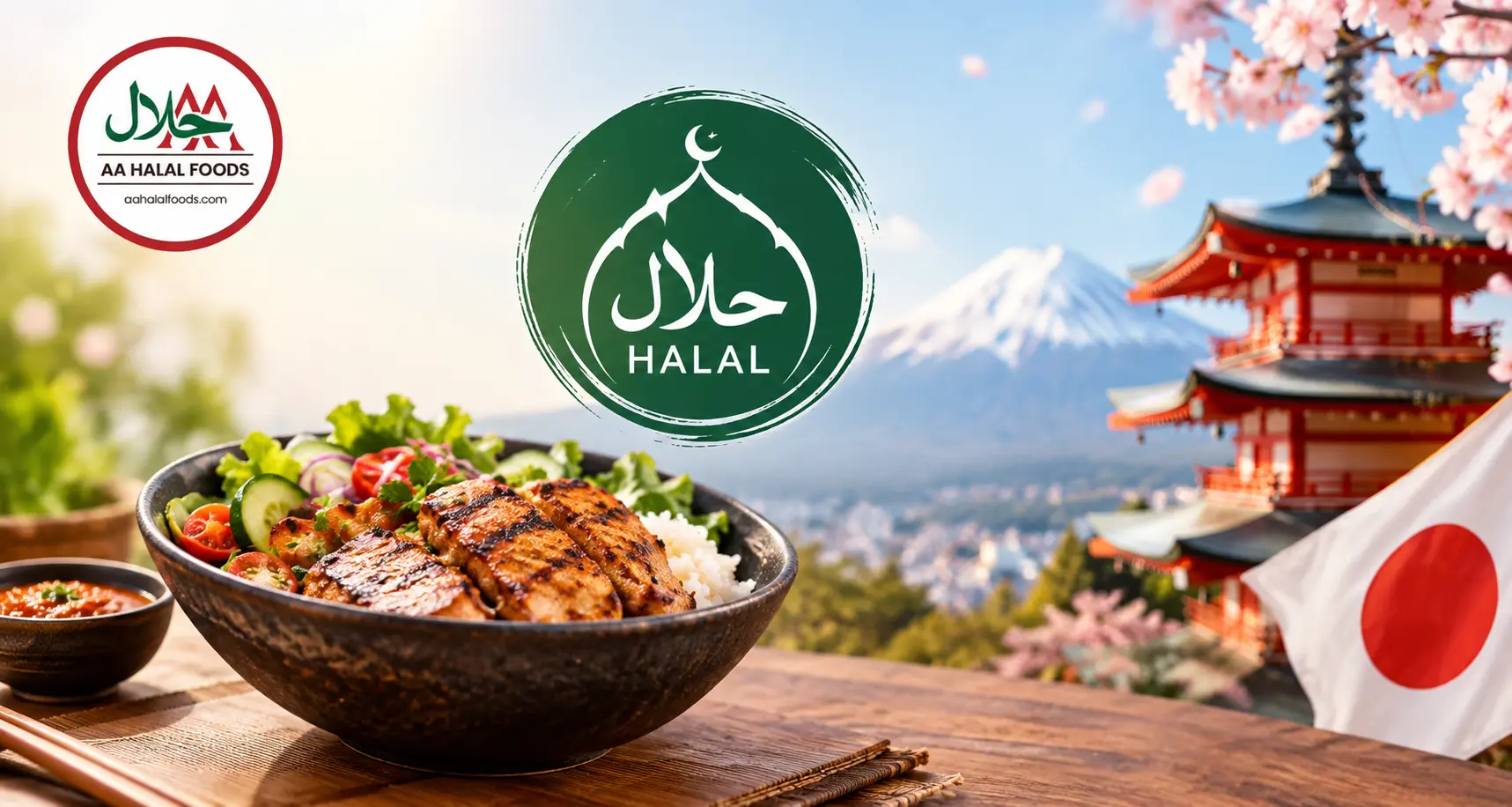
If you are Muslim and living in or visiting Japan, you have probably asked yourself this question more than once: is this food halal? Japan is not a Muslim-majority country, so halal food is not always easy to spot. Ingredient labels can be confusing, and many everyday dishes hide things like pork fat or alcohol.
This guide breaks down what halal food actually means, how halal certification works, and why halal food is becoming more important in Japan. By the end, you will know exactly what to look for and where to find it, including through AA Halal Foods.
What is halal food?
Halal is an Arabic word that means “permitted” or “allowed” under Islamic law. Halal food follows a set of rules that decide what Muslims can and cannot eat.
Some basic rules of halal food:
- No pork or pork by-products
- No alcohol, including small amounts used in cooking
- Meat must come from an animal slaughtered in a specific way, known as dhabiha, which includes a prayer and a quick, humane cut
- No blood or blood by-products
- No cross-contamination with non-halal ingredients during processing
The opposite of halal is haram, which means “forbidden.” Foods like pork, alcohol, and meat from animals not slaughtered the halal way all fall into this category.
It sounds simple on paper, but in practice, halal rules touch almost every step of how food is made, not just the final ingredient list.
How halal certification works
Since halal rules go beyond just the ingredients, halal certification exists to confirm that a product truly meets the standard from start to finish.
Halal certification bodies check:
- What ingredients go into a product
- How the product is processed and packaged
- Whether the equipment used is shared with non-halal products
- Whether cross-contamination is properly prevented
Well-known certification bodies include JAKIM in Malaysia and MUI in Indonesia. In Japan, several local halal certification organizations also inspect and approve products for the Muslim community and halal tourists.
When you see a halal certification logo on a product, it means an independent body has reviewed the entire process, not just taken the manufacturer’s word for it. This is why checking for the logo is so much more reliable than guessing from the ingredient list alone.
Why halal food is harder to find in Japan
Japan’s food culture was not built with halal rules in mind, and that creates a few common problems for Muslim residents and travelers.
Hidden alcohol in cooking. Ingredients like mirin and sake show up in a huge number of Japanese dishes, from teriyaki sauce to simmered vegetables. Many people do not realize these are alcohol-based.
Pork in unexpected places. Ramen broth is often made with pork bones or pork fat, even when the noodles and toppings look neutral. Pork gelatin also shows up in snacks, candy, and sauces.
Ingredient labels are hard to read. Japanese food labeling laws do not require halal disclosure, and labels are written for a general audience, not for Muslim shoppers checking for specific ingredients.
Limited halal options outside big cities. Halal restaurants and grocery stores are still concentrated in places like Tokyo and Osaka. Smaller cities and towns often have very few options.
These are not small inconveniences. For someone trying to eat halal every day, they mean constant label-checking and asking questions before every meal.
Why halal food matters in Japan right now
Halal food is becoming a bigger part of Japan’s food scene, and there are real reasons behind this shift.
More Muslim residents. Japan’s Muslim population has grown steadily, driven by workers, students, and families settling in the country long-term.
Halal tourism is rising. Visitors from Malaysia, Indonesia, and the Middle East make up a growing share of Japan’s tourism. Halal food access directly affects where these travelers choose to go and how much they spend.
Businesses are responding. More restaurants now offer halal or halal-friendly menus, and halal certification programs have expanded across the country. Halal grocery stores, both physical and online, have also grown to meet demand.
This matters beyond just convenience. Reliable halal food access affects whether Muslim families feel comfortable settling in Japan long-term, and whether Muslim travelers feel welcome to visit.
How to find halal food in Japan
Finding halal food in Japan takes a bit more effort than in Muslim-majority countries, but it is very doable once you know where to look.
- Check for halal certification logos on packaging before buying
- Use halal food apps or directories that list certified restaurants and stores near you
- Shop at dedicated halal grocery stores, either in person or online, where every product is already verified
- Ask directly at restaurants about ingredients and cooking methods if nothing is labeled
- Buy from an online halal grocery delivery service if you live outside major cities with limited local options
Out of all these, shopping from a dedicated halal grocery store is usually the easiest and most reliable option, since the guesswork is already done for you.
How AA Halal Foods makes this easier
This is exactly where AA Halal Foods fits in. We stock halal meat, snacks, and everyday groceries, all verified and ready to order online, and deliver across Japan.
Instead of checking every label or hunting down a speciality store in person, you can browse our shop, know exactly what you are getting, and have it delivered to your door. Whether you are stocking up on staples or looking for a specific halal product you have not been able to find locally, it is worth checking our shop first.
Final thoughts
Halal food is about more than a single ingredient. It covers how food is made, processed, and verified from start to finish. In Japan, where halal is not the default, understanding these rules and knowing where to look makes everyday eating a lot less stressful.
The good news is that halal food access in Japan keeps improving, and options like AA Halal Foods make it easier to shop with confidence. Browse our halal grocery selection today and see what is available near you.
Frequently asked questions
Is Japanese food halal?
Not by default. Many common dishes contain alcohol like mirin or sake, or use pork-based broths and fats. Always check ingredients or look for a halal certification logo.
What foods should Muslims avoid in Japan?
Common ones to watch for include ramen with pork broth, dishes cooked with mirin or sake, and snacks containing pork gelatin. When in doubt, ask or check the label.
Where can I buy halal food in Japan?
You can find halal food at certified halal restaurants, dedicated halal grocery stores, or through online halal grocery delivery services like AA Halal Foods.
Is ramen halal in Japan?
Standard ramen is usually not halal, since the broth often contains pork. However, a growing number of restaurants now offer halal-certified ramen made with halal broth and ingredients. Browse our full noodles and pasta collection and place your order in just a few clicks.