











Fresh Vegetables in Japan: Quality Buying Guide

Introduction
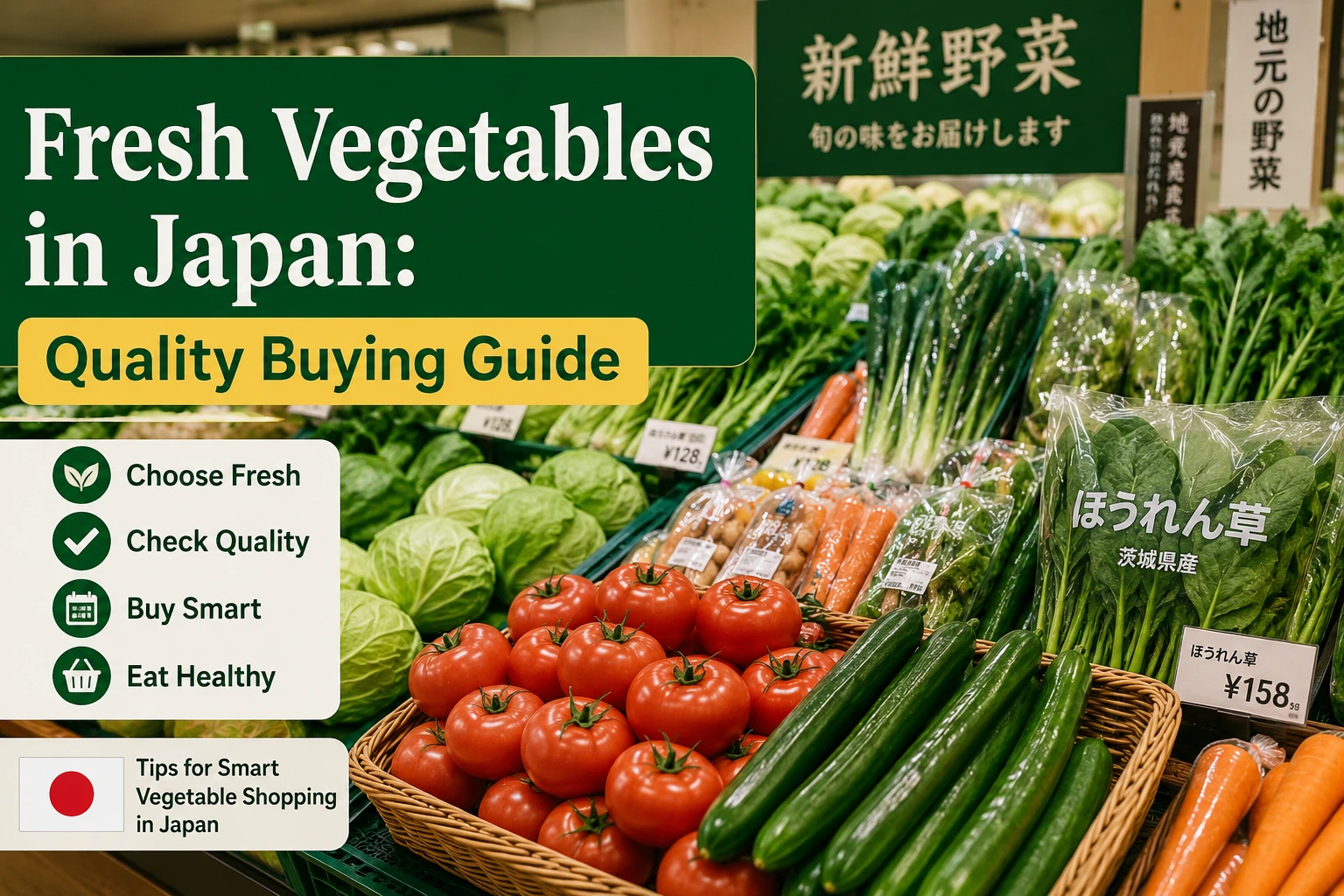
Shopping for fresh vegetables in Japan can feel overwhelming for newcomers. Japanese supermarkets are known for their high standards, clean packaging, and seasonal variety. However, knowing how to choose the freshest produce ensures better taste, nutrition, and value for money. This guide will help you confidently pick quality vegetables every time you shop.
Why Freshness Matters in Japan
Fresh vegetables in Japan are often sold with strict quality control. Still, freshness can vary depending on season, storage, and transport. Choosing fresh produce helps you:
- Improve taste and texture
- Get better nutrition
- Reduce food waste
- Save money in the long run
How to Choose Fresh Vegetables in Japan
1. Check Color and Appearance
Fresh vegetables should look vibrant and natural.
- Green vegetables → bright and crisp (not yellowish)
- Root vegetables → firm, smooth skin
- Leafy greens → no wilting or brown edges
Avoid vegetables that look dull, shriveled, or discolored.
2. Feel the Texture
In Japan, many vegetables are pre-packed, but when possible:
- Cucumber, carrots, and radish should feel firm
- Avoid soft or mushy spots
- Heavy vegetables usually mean higher water content and freshness
3. Check Packaging Dates
Japanese supermarkets often label produce with packing or harvest dates.
- Always choose the newest date available
- Avoid packages with condensation or water droplets inside
- Check expiry or “best before” labels when available
4. Seasonal Selection is Key
Japan strongly follows seasonal eating. Seasonal vegetables are fresher, cheaper, and tastier.
Examples:
- Spring → spinach, asparagus
- Summer → cucumber, eggplant, tomato
- Autumn → pumpkin, sweet potato
- Winter → daikon, cabbage
5. Smell Test (When Possible)
Fresh vegetables have a mild, natural smell.
- No sour or strong odor
- Leafy greens should smell fresh, not bitter or rotten
Best Places to Buy Fresh Vegetables in Japan
You can find high-quality produce in:
- Local supermarkets (AEON, Ito-Yokado)
- Farmers’ markets (direct from growers)
- Convenience stores (limited but fresh options)
- Online grocery delivery services
Extra Tips for Smart Shopping
- Buy small quantities frequently for maximum freshness
- Compare multiple packs before choosing
- Learn basic Japanese labels for better selection
- Store vegetables properly after buying (fridge vs room temperature)
Conclusion
Choosing fresh vegetables in Japan is easy once you know what to look for. Focus on color, texture, seasonality, and packaging dates. With practice, you’ll quickly become confident in selecting high-quality produce every time you shop.